
Learn / Cash and M-Pesa
One till, two moneys: cash and M-Pesa
Customers pay both ways in the same hour. If you only watch the drawer—or only watch M-Pesa—you will close with a story you cannot trust.
The business problem
Cash is in the tin. M-Pesa is on the phone. Deni is in someone’s head. At closing you ask: “Did we make money?” and get three different answers.
Why it matters
Kenyan shops already run on Lipa Na M-Pesa. The risk is not M-Pesa itself—it is unlinked sales: stock leaves, money arrives somewhere, and the till never ties them together. That is how shrinkage and “good days” that feel empty are born.
Common mistakes
- Recording only cash because M-Pesa “is already on the phone”
- Mixing personal and shop M-Pesa without a sale record
- Split payments (part cash, part M-Pesa) that never get written as one ticket
- Reconciling M-Pesa statements weekly instead of matching sales daily
Best practices
- Every sale chooses a method: cash, M-Pesa, split, or deni—before the customer leaves
- Optional: note the M-Pesa reference from the customer’s confirmation
- At closing, compare cash count + M-Pesa receipts to recorded sales—not memory
- Treat “paid on M-Pesa” without a till line as an incomplete sale
How F-Biz by Fayvad helps
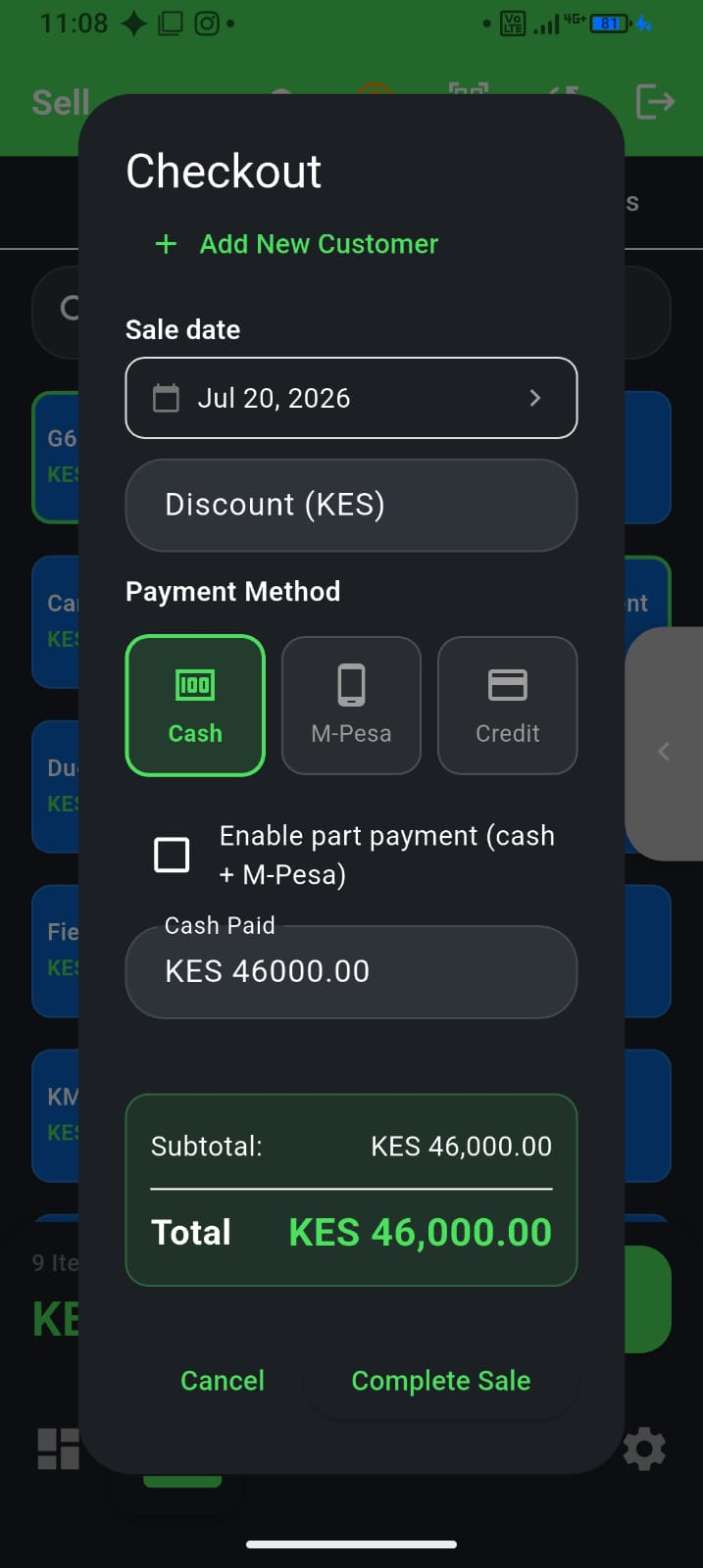
At checkout you mark how the customer paid. F-Biz does not replace Lipa Na M-Pesa—customers still pay as they do today. It records the till so stock and money stay linked, including split payments.
Action to take today
For the next five sales, force yourself to name the payment method out loud before you bag the goods. If any of those five would have been “I’ll remember,” write them properly tonight.